Tampilkan postingan dengan label what. Tampilkan semua postingan

Kamis, 05 Mei 2016

Chinese Yuan – What Has Happened - forex trading account uk

Chinese Yuan – What Has Happened ~ forex trading account uk


The July Trade Numbers

The Chinese government saw a drop of 8.9 percent in exports for July and reacted swiftly with a devaluation of the Yuan. Being the world’s largest goods trader, China has set up for many changes to happen around the world.

(Xinhua)
Zhang Xiaohui, assistant governor of Chinas central bank, said the value of the yuan has gradually returned to market levels as the discrepancy between the central parity rate and the actual trading rate has been largely corrected after declines early this week.
"There are no grounds for persistent and substantial depreciation as sound economic fundamentals determine that the yuan will re-enter a rising streak," said Zhang.
 
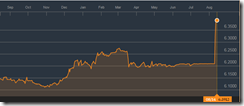
Here is a one year chart of the USDCNY from Bloomberg
image

 
To understand what is happening with the Yuan will take a significant amount of research and consideration of a lot of opinions. Our weekend will be filled with studying the effects of the recent moves in the Yuan. Many currency pairs will be affected by this move and that will develop in coming days.
I have gathered several articles below, and, as well, Bloomberg has quite a collection of articles on their site at this link.

Chinas Yuan Could Fall 10% or More - Barrons
http://news.google.com Sat, 15 Aug 2015 05:40:31 GMT
BarronsChinas Yuan Could Fall 10% or MoreBarronsOn a sultry mid-August evening last week, world currency markets were rocked by what amounted to nothing short of a regime change: China announced a devaluation and freer float of its currency, the y ...
Read more ...
China Gambles with the Yuan - The New Yorker
http://news.google.com Fri, 14 Aug 2015 12:08:45 GMT
The New YorkerChina Gambles with the YuanThe New YorkerIf youre confused by whats been happening to Chinas currency over the past few days, dont feel bad. The wild ride that the yuan has taken has left plenty of people perplexed, including, perha ...
Read more ...
IMF Calls Chinas Yuan Moves Welcome Step to More Flexible Rate - Bloomberg
http://news.google.com Sat, 15 Aug 2015 00:15:48 GMT
Wall Street JournalIMF Calls Chinas Yuan Moves Welcome Step to More Flexible RateBloombergThe International Monetary Fund said Chinas move to link the yuans value to market forces is an encouraging step toward what may become a freely floated curr ...
Read more ...
Many factors at play in the devaluation of yuan - Marketplace.org
http://news.google.com Fri, 14 Aug 2015 21:29:51 GMT
Marketplace.orgMany factors at play in the devaluation of yuanMarketplace.orgA man changes foreign currency into Chinese yuan in Hongqiao airport in Shanghai on Friday. Chinas central bank raised the value of the yuan against the U.S. dollar by 0.05 ...
Read more ...
Stocks end week lower, bruised by China yuan weakness - Reuters
http://news.google.com Fri, 14 Aug 2015 20:59:00 GMT
ReutersStocks end week lower, bruised by China yuan weaknessReutersFor the week, the MSCI All World Index fell 0.4 percent, its second consecutive weekly decline. Chinas modest devaluation of its currency dominated market activity, as the yuan lost ...
Read more ...
China policymakers may lose control of yuan: Trader - CNBC
http://news.google.com Fri, 14 Aug 2015 12:15:51 GMT
CNBCChina policymakers may lose control of yuan: TraderCNBCThe next GDP print lets say misses and the market really tries to push the yuan lower. Will the Chinese government simply let the yuan float or will they come back and try to put the genie b ...
Read more ...
Wall St settles after yuan shock week - The Australian Financial Review
http://news.google.com Fri, 14 Aug 2015 21:08:58 GMT
The Australian Financial ReviewWall St settles after yuan shock weekThe Australian Financial ReviewWall Street markets were composed at the end of a tumultuous trading week, as Chinas plunging currency stabilised and positive American economic data ...
Read more ...
US stocks make slight gains as yuan and oil stabilize - WRAL.com
http://news.google.com Fri, 14 Aug 2015 14:26:15 GMT
WRAL.comUS stocks make slight gains as yuan and oil stabilizeWRAL.comCHINA CALM: Chinas currency, the yuan, was stable after falling sharply earlier this week. On Friday, the dollar was buying 6.3901 yuan, little changed from the previous day when Z ...
Read more ...
How Chinas yuan devaluation could affect your food costs - Moneycontrol.com
http://news.google.com Sat, 15 Aug 2015 08:04:24 GMT
Moneycontrol.comHow Chinas yuan devaluation could affect your food costsMoneycontrol.comChina is one of the worlds biggest importers of what are known as "soft" commodities – including key ingredients such as soybeans. Chinas imports have become m ...
Read more ...
Impact on rupee from Chinas yuan move to be temporary: Economic adviser ... - Times of India
http://news.google.com Sat, 15 Aug 2015 09:09:00 GMT
NDTVImpact on rupee from Chinas yuan move to be temporary: Economic adviser ...Times of IndiaNEW DELHI: The impact of the devaluation of the Chinese yuan on the rupee will only be "temporary", given "adequate" foreign exchange reserves, the country ...
Read more ...


More info for Chinese Yuan – What Has Happened ~ forex trading account uk:

Selasa, 03 Mei 2016

What is PIN BAR Method in Forex Introduction Defination - forex trading courses sydney

What is PIN BAR Method in Forex Introduction Defination ~ forex trading courses sydney


An Introduction to Pin Bars in Forex Trading and How to Trade Them Effectively…
The pin bar formation is actually a price reversal pattern consisting of three bars. Once familiarized with pin bar formation it is apparent from looking at any price chart just how profitable this pattern can be. Let’s go over exactly what a pin bar formation is and how you can take advantage of the pin bar strategy in the context of the Forex market.

What is a Pin Bar?
The actual pin bar itself is the middle bar of a three-bar formation that can be found on any stripped down “naked” bar chart or candlestick chart. We will cover the candlestick pin bar formation after our discussion of the pin bar formation using standard bar charts. Many people prefer the candlestick version over standard bar charts because it is generally regarded as a better visual representation of price action.

Characteristics of the Pin Bar Formation
• The open and close of the pin bar are within the price range of bar 1 and bar 3 of the formation, or very close to being within their range.
• The open and close of the pin bar are very close together, the closer the better.
• The open and close of the pin bar are near one end of the bar, the closer to the end the better.
• The shadow or tail of the pin bar sticks out from the surrounding price bars, the longer the tail of the pin bar the better.
Bearish Reversal Pin Bar Formation
In a top or bearish reversal pin bar formation the pin bar sticks out noticeably in between bar 1 and bar 3 and has a long protruding tail.

Bullish Reversal Pin Bar Formation
The bullish or bottom reversal pin bar formation is the opposite of the top reversal pin bar formation. Here again, we see the pin bar has a long protruding tail that has obviously rejected a certain price level.

How to Trade a Pin Bar Formation
To effectively trade the pin bar formation you need to first make sure it is well-defined, (see above characteristics). Not all pin bar formations are created equal; it pays to only take the pin bar formations that meet the above characteristics.

Next, try to only take take pin bars that are displaying confluence with another signal. Generally, pin bars taken with dominant trend confluence are the most accurate. However, there are many profitable pin bars that often occur in range-bound markets or at major market turning points. Try to also combine the pin bar pattern with strong support and resistance levels, trend lines, Fibonacci retracement levels, or moving averages.

The pin bar formation is a reversal setup, so for a bearish pin bar formation we will sell on a break of the low of the pin bar and place a stop loss 1 pip above the tail of the pin bar. On a bullish pin bar formation we will buy on a break of the high of the pin bar and set our stop loss 1 pip below the low of the tail of the pin bar.

Candlestick Pin Bar Formations

Candlestick pin bar formations are exactly the same as standard bar chart pin bar formations except the terminology is a little different. They should be traded the same way however.
• A bearish reversal or top reversal pin bar formation can be called a long wicked inverted hammer, long wicked doji, long wicked gravestone, or shooting star.
• A bullish reversal or bottom reversal pin bar formation can be called a long wicked hammer, long wicked doji, or long wicked dragonfly.
Candlestick pin bar candle formations should also display the same characteristics that we listed above for standard bar chart pin bar formations.


In Summary
The pin bar formation can be a very valuable tool in your arsenal of forex trading strategies. The best pin bar strategies occur with a confluence of signals such as support and resistance levels, dominant trend confirmation, or other confirming signals. Look for well formed pin bar setups that meet all the characteristics listed in this tutorial and don’t take any that you don’t feel particularly confident about. Pin bars work on all time frames but are especially powerful on the 4hour, daily, and weekly charts. It is possible to make consistent profits by only trading the pin bar formation, and you can learn more about it in my price action trading course. Add this powerful setup as one of your main forex trading methods and you will wonder how you ever traded without it.


More info for What is PIN BAR Method in Forex Introduction Defination ~ forex trading courses sydney:

Senin, 02 Mei 2016

What is the Double Bottom Chart Strategy in Forex Trading - forex trading courses in malta

What is the Double Bottom Chart Strategy in Forex Trading ~ forex trading courses in malta


Double Bottom Chart Pattern in Forex Trading
Forex trading now being very popular through out the world . Many investors like to trade in Forex than stock markets . But , Without proper basic knowledge , traders or investors can loss all their valuable money. So before investment in Forex Market, traders should learn few basic fundamentals & strategies to reduce risk . The "Double Bottom technical analysis charting pattern" is a common and highly effective price reversal pattern in Forex Market. 

To create a double bottom pattern, price begins in a downtrend, stops, and then reverses trend. However, the reversal to the upside is short-term. Price breaks again to the downside only to stop again and reverse direction upwards. With the second bottom of the double bottom pattern, it is usually more bullish if the second low is higher than the first low.


Double Bottom Buy Signal
The signal to buy is given when the confirmation line is penetrated to the upside. The confirmation line is drawn across the top of the double bottom pattern 

Often, after price penetrates the confirmation line, price will retrace for a short time, sometimes back to the confirmation line. This retracement offers a second chance to get into the market long


More info for What is the Double Bottom Chart Strategy in Forex Trading ~ forex trading courses in malta:

Rabu, 27 April 2016

What do support and resistance levels mean in Forex Market - forex trading courses scotland

What do support and resistance levels mean in Forex Market ~ forex trading courses scotland


Support level is a level lower than the current rate, which could possibly take an upward turn. Resistance level is a level above the current rate, which could possibly take a downward turn. 

More info for What do support and resistance levels mean in Forex Market ~ forex trading courses scotland:

Minggu, 17 April 2016

What is Breakout Trading in Forex Market Advantages Disadvantages - forex trading courses perth

What is Breakout Trading in Forex Market Advantages Disadvantages ~ forex trading courses perth


What’s so good about breakout trading? Well, there are several reasons and to list a few:
1. As a breakout trader, you are a market follower. You just go with the flow instead of whining that you bought low or sold high, against the market, while the market was unstoppable.


2. If things go wrong, you can still blame the market instead of blaming yourself, since you are a market follower (see 1. above), right? – I guess this qualifies as a morale booster. It’s always better to blame something/someone else instead of blaming yourself, thus losing confidence in what you’re doing – and you certainly DON’T want to lose confidence in what you’re doing, because knowing your stuff and believing in what you do is what trading is all about.
3. Chances are that you will jump into some violent moves in your favor, as best breakouts usually occur fast, market being driven by tons of stop-loss orders getting filled on its way (we all know most people set their stops above/below recent highs/lows or range tops/bottoms)

And some of the disadvantages:
1. Many times you need a larger stop loss, compared to buying around support or selling at resistance, because you should allow for some corrective movements against the position. Corrections are normal and they occur all the time. A tight stop is easily hit during a corrective phase once a resistance/support is breached and you just jumped into a breakout trade. Keep in mind that market has a habit of re-testing a key level from the opposite side once it’s been breached (i.e.: support becomes resistance and vice-versa). The re-test is what confirms that a change or role occurred, and that’s when you start questioning whether the breakout was real or fake – and tight stops or manual closing/reversing become some of the things to put on the “Don’t Do This” list.
2. Many breakouts fail (doh – playing the Captain Obvious role here). Else, everyone would trade breakouts and know each other because they’d be sharing the same exotic beaches somewhere. Anyway, once you become familiar to these kind of market movements, it should be easier to identify a real breakout when you see it.


More info for What is Breakout Trading in Forex Market Advantages Disadvantages ~ forex trading courses perth:

Rabu, 13 April 2016

What is Flag Pattern Charting analysis Strategy in Forex Trading - forex trading courses new york

What is Flag Pattern Charting analysis Strategy in Forex Trading ~ forex trading courses new york


Flag Pattern Strategy in Currency Trading
Forex trading now being very popular through out the world . Many investors like to trade in Forex than stock markets . But , Without proper basic knowledge , traders or investors can loss all their valuable money. So before investment in Forex Market, traders should learn few basic fundamentals & strategies to reduce risk. The "Flag Pattern Charting analysis" is a common and highly effective price reversal pattern in Forex Market. 

The Flag pattern usually occurs after a significant up or down market move. After a strong move, prices usually need to rest. This resting period usually occurs in the shape of a rectangle, thus the word "flag". The Flag is considered a continuation pattern because after resting, prices will usually continue in the direction they did before.


Flag Buy Signal
When price has moved higher and prices have consolidated, creating a channel of support and resistance, a buy signal is given when prices penetrate and close above the upward resistance line.

Flag Sell Signal
Assuming prices previously moved downward, then after a period of price consolidation, a sell signal is given when price penetrates and closes below the support line.

See the above chart to be specific.


More info for What is Flag Pattern Charting analysis Strategy in Forex Trading ~ forex trading courses new york:

Senin, 11 April 2016

What is the Difference between Forex and Stocks - forex trading classes in sri lanka

What is the Difference between Forex and Stocks ~ forex trading classes in sri lanka


Historically the securities markets have been looked at, at least by the majority of the public, as an investment vehicle. In the last ten years securities have taken on a more speculative nature. This was perhaps due to the downfall of the overall stock market as many security issues experienced extreme volatility because of the "irrational exuberance" displayed in the marketplace. The implied return associated with an "investment" was no longer true. (If indeed it ever was.) Many traders engaged in the "day trader" rush of the late 90s only to realize that from a leverage standpoint it took quite a bit of capital to day trade, and the return while potentially higher than long term investing was not exponential to say the least. 


After the onset of the "day trader" rush, many traders moved into the Futures stock index markets where they found they could leverage their capital greater and not have their capital tied up when it could be earning interest or making money somewhere else. Like the futures markets spot currency trading is an excellent vehicle for the pattern day trader that desires to leverage his current capital to trade. Spot currency trading provides more options and greater volatility while at the same time stronger trends than currently available in stock futures indexes. Former securities day traders have an excellent home in spot foreign exchange.

A good example is the Globex market. While the Globex market is only closed for a 15 minute period each day, the liquidity available after the open outcry market is closed in Chicago is normally very low. Spreads are wider and the ability to place larger orders is non-existent. Because of this most volume traders are forced into trading the EFP market overnight. The EFP market is the spot market priced in futures pricing. EFPs however come with additional fees, and are not available from an electronic interface. Electronic access, speed, no fees, and unmatched liquidity 24 hours a day makes Spot FX the choice for the currency trader.
No Middlemen
Centralized exchanges provide many advantages to the trader. However, one of the problems with any centralized exchange is the involvement of middlemen. Any party located in between the trader and the buyer or seller of the security or instrument trader will cost the them money. Either in time or in fees. Spot currency trading does away with the middlemen and allows clients to interact directly with the market maker responsible for the pricing on a particular currency pair. Quicker access, cheaper costs.
Buy/Sell programs do not control the market
How many times have you heard that "fund A" was selling "X" or buying "Z"; Rumor had it that the funds were taking profits because of the end of the financial year or because today is "triple witching day", all as an explanation of why this stock is up or the market in general is down or positive on the session. No matter what your broker says the stock market is very susceptible to large fund buying and selling, and it is not uncommon for a fund to "run" a particular issue for a few days. In spot currency trading the liquidity of the market makes the likelihood any one fund or bank to control a particular currency very slim. Banks, Hedge funds, FCMs, governments, retail currency conversion houses, and large net worth individuals are just some of the participates in the spot currency markets the liquidity is unprecedented.
At the mercy of Analysts on TV
Have you watched TV lately? Heard about a certain Telecomm stock and an analyst of a prestigous brokerage firm accused of keeping their recommendations "BUY" when the stock was rapidly declining? It is the nature of these relationships. No matter what the government does to step in and discourage this type of activity, we have not heard the last of it. IPOs are big business for both the companies going public and the brokerage houses. Relationships are mutually beneficial and analysts work for the brokerage houses which need the companies as clients. That catch-22 will never disappear. Foreign exchange, as the prime market, generates billions in revenue for the worlds banks is a necessity of the global markets. Analysts in foreign exchange dont drive the deal flow, they analyze.

More info for What is the Difference between Forex and Stocks ~ forex trading classes in sri lanka:

Jumat, 08 April 2016

What is Double Top Strategy in Currency Forex Trading - forex trading courses nz

What is Double Top Strategy in Currency Forex Trading ~ forex trading courses nz


Double Top Strategy in Currency Trading
Forex trading now being very popular through out the world . Many investors like to trade in Forex than stock markets . But , Without proper basic knowledge , traders or investors can loss all their valuable money. So before investment in Forex Market, traders should learn few basic fundamentals & strategies to reduce risk . The "Double Top technical analysis charting pattern" is a common and highly effective price reversal pattern in Forex Market. 

Double Top Formation Components:-
First High: Bulls push prices upwards making new highs; however, these new highs are short lived and prices retreat.

Second High: Prices dont retreat for long because bulls make another run, making a similar high. Nevertheless, this is bearish, because bulls were unable to push prices higher; bears held their ground at the previous high level. The bears push prices back to support (Confirmation line); this is a pivotal moment - either bulls will make another push higher or bears will take control and push prices even lower, more than likely taking over for good.

Double Top Sell Signal:-
Sell when price closes below the confirmation line.

Note that traders expect a significant increase in volume to accompany the confirmation line break; if there is very little volume when price pierces the confirmation line, then the move downward is suspect. Small volume usually means weak support of price movement 


More info for What is Double Top Strategy in Currency Forex Trading ~ forex trading courses nz:

Rabu, 06 April 2016

What is Forex - forex trading courses toronto

What is Forex ~ forex trading courses toronto


Now most people today probably dont know what exactly Forex is. Let us explain Forex stands for Foreign Exchange Market. Sort of like a Wall Street of the World! However there are some considerable differences between Wall Street and Forex. While both Forex and Wall Street do sell stocks of companies, Forex also uses other countries currency not just the U.S dollar. 


Which in turn can be more profitable.Some other differences between the two are the facts that Forex can be much more profitable for normal hard working people like you and me than Wall Street (even if you currently work at Wall Street right now!) Now you might ask how is this possible? Well let me explain, unlike people who work at Wall Street that will make some money when a stock goes up in worth sure but what about when their stocks go plummeting down to the earth like a sack of bricks? Then all they do is lose money.The largest difference with Forex and Wall Street is that anyone and I mean ANYONE can earn money on Forex through the internet.


More info for What is Forex ~ forex trading courses toronto:

Kamis, 31 Maret 2016

Chinese Yuan depreciates further What is the endgame - forex trading account australia

Chinese Yuan depreciates further What is the endgame ~ forex trading account australia


The devaluation of the Yuan is going to have a significant effect on markets, forex, stocks, commodities, futures as weeks pass. This article appeared on eftrends site August 13.


This article was written by Rob Waldner, chief strategist and head of the Multi-Sector team for Invesco Fixed Income.

After China’s surprise devaluation of the yuan by 1.9% on Tuesday, the Chinese currency was devalued by another 1.6% on Wednesday.1 Policymakers appear to be following a pattern of setting the daily fix — which sets the center point for trading during that day — with reference to the market price at the close of the previous day. Invesco Fixed Income believes that further devaluations are likely as the People’s Bank of China (PBoC), the country’s central bank, acquiesces to market pressure and price movements over time.

‘Dirty float’ strategy confirmed

On Tuesday, the PBoC intervened in the currency market at the end of the day to apparently limit depreciation of the exchange rate into the market’s close. This confirms our view that China is likely pursuing a so-called “dirty float” — a floating exchange rate system in which a government or central bank occasionally intervenes to affect the value of its country’s currency in a managed fashion. With this intervention, we believe the PBoC aims to control the speed of the yuan’s depreciation to prevent it from declining too rapidly. It remains to be seen how effectively the authorities will be able to manage the yuan’s fall. Further yuan depreciation is likely, in our view, and we anticipate competitive devaluations down the line among China’s trading partners, especially in Asia.

Interpreting these devaluations

There appears to be some confusion locally and abroad about the rationale for Tuesday’s decision to alter the currency regime for the first time in more than two decades. The domestic Chinese press discusses the move in terms of needed reform to make the yuan more market driven, perhaps making it more likely to be included in the International Monetary Fund’s Special Drawing Rights (SDR) basket of international reserve currencies. SDRs serve to supplement member countries’ official reserves. An additional interpretation is that the devaluation could help boost exports to support economic growth. Both views are valid.


The bigger picture

In our view, China’s recent currency regime change fits into a broader story: Major economic blocs have adjusted their currencies in recent years to reignite growth and combat disinflationary and deflationary pressures caused by the long cycle of deleveraging following the great financial crisis.

We believe that we’re moving into an environment of ongoing depreciation of the yuan to boost growth, offset deflationary pressure and manage high debt loads within the Chinese economy. Similar policy action occurred beginning two years ago in Japan and a year later in Europe. In our view, China’s move opens the Asia chapter.

Competitive devaluations across the globe aren’t possible without affecting all major economies, as indicated by the current volatility upswing in global markets in response to China’s latest policy action. Although the need for Chinese stimulus has been clear, our core view had been that the Chinese authorities would proceed without using its currency as a policy tool. Instead, China has apparently put the yuan in play. The impact of this move will extend to many markets and have several implications. In our view:

  1. We’re entering a period of US dollar appreciation versus non-Japan Asia. Therefore, we are reallocating our currency views to be short non-Japan Asia, namely Taiwan, Korea, Malaysia, Singapore, and China.
  1. The yuan devaluation is positive for both European and US government bonds, in our view. The deflationary impact of a weaker yuan and non-Japan Asia currencies is likely to lead to declines in long-maturity government bond yields in Europe and the US and lead to yield curve flattening.
  1. Yuan devaluation probably means the Federal Reserve (Fed) will need to tighten less. While we believe the Fed will likely raise interest rates by the end of this year, possibly as soon as September, China’s move may decrease the amount of tightening necessary, ultimately reducing the terminal fed funds rate and effectively limiting the level of US interest rates.
  1. In general, riskier assets, such as stocks and credit assets, are likely to come under some pressure in the face of deflationary pressures. We believe Asia and emerging market credit in general are likely to be the most pressured, while European credit is likely to be the most isolated.

More info for Chinese Yuan depreciates further What is the endgame ~ forex trading account australia:

Rabu, 23 Maret 2016

What is a trailing stop loss in Forex Market - forex trading classes singapore

What is a trailing stop loss in Forex Market ~ forex trading classes singapore


Trailing Stop-loss is a compound stop-loss order where a stop-loss price is set at a fixed rate below the market price. If the market price goes up, the stop loss price will also go up proportionally. If the market price goes down, the stop-loss price remains the same. 

In this way, the trader can set a limit on the maximum possible loss but not limit earnings. This means that trailing stop-loss follows the current price by X pips. Therefore trailing stop-loss is a stop-loss control procedure - "it follows the price to profit." Attention! Trailing stop-losses only work when your trading terminal is connected to the server through the Internet. 


More info for What is a trailing stop loss in Forex Market ~ forex trading classes singapore:

Senin, 21 Maret 2016

What is Hikkake Pattern in Forex - forex trading courses reviews

What is Hikkake Pattern in Forex ~ forex trading courses reviews


The Hikkake Pattern is a more variable candlestick formation in that it can indicate either reversals or continuations, depending on the overriding trend seen in the market. The pattern is sometimes referred to by other names, such as an Inside False Breakout or a simple Fake Out but since these terms can also apply to other patterns, the term Hikkake is generally preferred. 


The pattern is made up of a period of stalling (a contraction in volatility), which is then followed by a short-lived price move that initially fools unsuspecting traders with respect to the next major price direction. However, like the other patterns, the Hikkake should not be viewed as a stand-alone signal capable of generating trades on its own.

There is a bullish and bearish version of the pattern. In both cases, the first candle is an Inside Bar (higher low and lower high, relative to the previous unit). Then, we see a candle with a higher low/higher high (for the bearish pattern), or a candle with a lower low/lower high (for the bullish pattern). Confirmation that a true pattern signal has been generated comes when price falls below the low seen in the first candle (in the bearish pattern), or when prices rise above the high seen in the first candle (for the bullish pattern). This confirmation must be seen within three candles of the last bar, or the signal becomes invalid.


More info for What is Hikkake Pattern in Forex ~ forex trading courses reviews:

Do You Like to Make Some Extra Money Before Christmas - forex trading courses in pune

Do You Like to Make Some Extra Money Before Christmas ~ forex trading courses in pune


6 Easy Ways to Make Extra Money Before Christmas
During the holiday shopping season, many of us find ourselves spending more than we expected. As a result, it’s common to look for ways to offset some of that spending by earning a little extra money at this time of year.

While you could get a seasonal job to work on top of your day job, or you could jump through hoops associated with getting a rebate, there are some easier ways to make extra money this holiday season.

Here are 6 easy ways to make extra money before Christmas:


1. Donate Plasma
My brother-in-law goes down to the blood bank and donates plasma twice a week. Depending on where you live, you can receive between $25 and $50 for each donation. You can go twice in a seven day period, as long as there are two days between each donation. This doesn’t take very long, and it can be a quick way to make a few dollars.

If you start now, you can get in about six donations between now and Christmas. That would equate to a total between $150 and $300, depending on what the local rate is. Not to mention the fact that you’ll be giving your karma a boost with the good deed!

2. Sell Some of Your Old Stuff

Go through your attic or basement and look for stuff you aren’t using anymore. We found some old Hallmark holiday ornaments we no longer care for, as well as a number of other items that we never use. You can sell your things on eBay, or you can sell it through the classifieds (local online classifieds work best). Or, if the weather isn’t too bad, you could even hold a yard sale. What you end up with depends on what you sell, but a neighbor recently brought in $350 by selling her unwanted items.

You can also consider selling some of your old jewelry. Just be careful of where you go to sell gold or silver, as you want the best possible price.

3. Fiverr
If you have a few minutes, you can perform relatively simple work for $5 a pop on the website Fiverr. The tasks aren’t too difficult, and it can be a good way to get a little extra cash. It’s not a ton, but it can start to add up if you get enough jobs. Just make sure that you don’t start spending too much of your precious time on these little tasks.

4. Yahoo! Voices
Do you write? While you can make money as a professional blogger, or off your own web site, it takes time to establish yourself and actually start making money. If you’re looking for some quick cash, consider Yahoo! Voices.

After signing up, you can submit your writing. If you submit for immediate payment, you can get between $5 and $25 (or more!) for your posts, depending on the timeliness and quality of your work. Plus, you receive extra payments based on pageviews — so, you could keep getting paid even after you stop writing articles.

5. Mystery Shopping

If you are careful, you can combine your love of shopping with your desire to earn money. My mom and my sister have both had success as mystery shoppers. If you make sure you’re working with a reputable company, and there is work in your area, this can be a good way to earn a couple hundred bucks before Christmas.

6. Forex Trading ;)

Do you have any other easy ways of earning extra money before Christmas?


More info for Do You Like to Make Some Extra Money Before Christmas ~ forex trading courses in pune: